
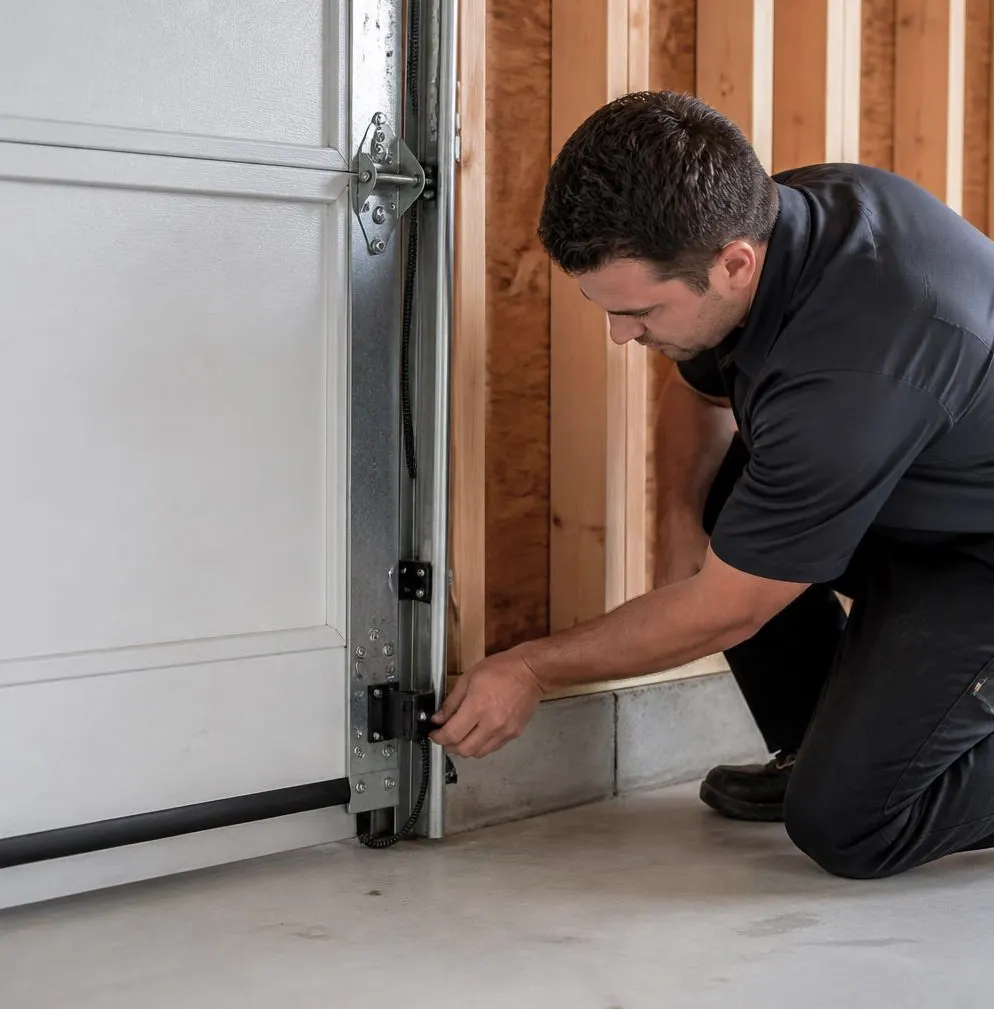
The Moment You Notice It
You're pulling into the garage after a stretch of afternoon downpours, and something looks off. Maybe it's a bubble under the paint near the bottom panel. Maybe the door is sticking a little when it closes, like it's suddenly a quarter-inch too big for its own track. One of you says it's nothing, just needs a wipe-down. The other says the door is falling apart. You're both a little right, and this is usually how the argument starts.
Here's what's actually happening, and how to tell which one of you should win.
Why Humid, Rainy Weather Does This to a Garage Door
Garage doors in this part of Florida deal with a specific combination: high humidity most of the year, sudden heavy rain during storm season, and long stretches where the garage itself stays damp and poorly ventilated. That combination affects steel doors and wood doors differently, but it hits both.
Rust on Steel Doors
Steel doors are coated and painted to resist corrosion, but that coating is only as good as its weakest point. Rust usually starts at:
- The bottom corners and bottom panel, where rain splashes up and sits against the metal
- Scratches or dings where bare metal got exposed, even small ones from a bike pedal or a lawn chair
- Hinges, rollers, and the tracks, where moisture collects and doesn't dry between storms
- Weep holes or drainage points that have gotten clogged with debris, so water sits instead of draining
Once rust starts, it doesn't stay put. It spreads under the paint, which is why a small orange speck this month can be a soft, flaking patch by next year if nothing is done.
Swelling on Wood and Wood-Composite Doors
If the door is wood or has wood trim and panels, humidity gets absorbed directly into the material. Wood swells when it takes on moisture and shrinks again when it dries out. In a climate where it almost never fully dries out for long between rain events, that cycle repeats constantly, and it's rarely even — the bottom of the door, which sits closest to standing water and splashback, usually swells more than the top.
This is why a wood or wood-composite door can start binding against the frame, scraping on one side, or needing extra force to close all the way. It's not usually the opener losing strength. It's the door itself changing shape slightly with the weather.
Cosmetic Problem or Real Problem? How to Tell
This is the part that actually settles most arguments. A few quick checks:
- Press a thumbnail into the rust spot. If the metal underneath feels solid, it's surface rust — ugly, but not urgent yet. If it feels soft, crumbly, or gives way, the metal is actually corroding through and that panel's lifespan just got shorter.
- Watch how the door moves. A little extra effort closing on a humid afternoon is normal swelling. Grinding, scraping, or the door stopping partway and reversing is the opener's safety sensors reacting to real resistance — that's not something to ignore.
- Check if it's one spot or spreading. Rust and swelling both tend to start small and localized. If the same spot keeps coming back after you clean and repaint it, moisture is getting in from somewhere you haven't found yet, like a cracked weatherstrip or a drainage point that's blocked.
- Look at the hardware, not just the panels. Rusted hinges, rollers, or springs are often a bigger safety issue than rust on the door's skin, because those parts are under tension and failure there happens suddenly, not gradually.
What Actually Helps
A few habits make a real difference against this climate, without needing a full replacement:
- Keep the bottom seal and weatherstripping in good shape. Cracked or flattened seals let water splash directly onto the door and track instead of running off.
- Clear weep holes and drainage channels so water doesn't pool against the bottom panel after a storm.
- Wipe down and dry hinges, rollers, and tracks after heavy rain when you can, especially going into the humid months ahead.
- Touch up bare or scratched metal with primer and matching paint before it has a chance to rust — this is the cheapest fix available and it only works before corrosion starts.
- Let the garage breathe. A vent fan or just cracking a window on dry days reduces the constant damp air that feeds both rust and wood swelling.
None of this stops humidity from existing. It just slows down the damage it causes, which is really the best anyone can do in this climate.
When to Call Precision Garage Door of Mcintosh
If the rust has gone past surface level, if a wood panel is swelling badly enough that the door won't seal or close right, or if you're just tired of guessing which spots are serious, that's when it makes sense to get it looked at. Our technicians can tell you honestly whether a panel needs Garage Door Panel Replacement or just cleanup and paint, and a Garage Door Maintenance & Tune-Up covers the hinges, rollers, and hardware that rust quietly without anyone noticing until something binds or fails.
If you're in Mcintosh, Micanopy, Hawthorne, Citra, Reddick, Orange Lake, Cross Creek, or Evinston and want a straight answer about what's actually happening to your door, call Precision Garage Door of Mcintosh. We'll tell you what's cosmetic, what's not, and settle the argument for good.